Preparing a cricket bat for match use requires understanding available methods and selecting the approach that matches individual circumstances.
The process of how to knock in a cricket bat in 2026 varies significantly based on time availability, technical confidence, and equipment access.
Players face multiple decision points throughout preparation. Each choice affects final bat performance, preparation time, and potential damage risk.
Contents
- 1 How to Knock in a Cricket Bat?
- 1.1 Who Should Knock In a Cricket Bat Themselves?
- 1.2 DIY vs Professional Bat Knocking: Quick Comparison
- 1.3 Essential Preparation Before Knocking Begins
- 1.4 Best 6 Step Guide to Knocking in Your Cricket Bat
- 1.5 Why Proper Knocking Improves Bat Longevity?
- 1.6 What Happens If You Skip Knocking In?
- 1.7 FAQs
- 1.8 Conclusion:
How to Knock in a Cricket Bat?
This guide compares execution methods and provides decision frameworks for selecting appropriate preparation approaches. The focus remains on practical factors rather than theoretical ideals.
Understanding how to do knocking of bat preparation correctly depends on matching methods to individual capabilities and constraints.
Who Should Knock In a Cricket Bat Themselves?
Players with 6-8 hours of available preparation time can complete manual knocking successfully.
The process requires sustained attention but no advanced technical skills.
Previous experience with bat maintenance reduces risk significantly.
First-time users should consider professional services or supervised initial attempts to avoid costly mistakes.
Manual preparation suits players who value understanding equipment preparation and accept responsibility for potential errors.
Those seeking guaranteed results or working with premium bats often prefer professional services.
Access to appropriate tools matters more than skill level.
Without a proper mallet or suitable alternatives, home preparation becomes impractical regardless of available time.
DIY vs Professional Bat Knocking: Quick Comparison
| Approach | Tools Needed | Time Required | Risk Level | Cost Range |
|---|---|---|---|---|
| DIY at Home | Mallet, oil, cloth, tape | 4-6 hours + drying | Medium (user-dependent) | Cost of tools only |
| Ball-in-Sock Method | Old ball, sock, oil, cloth | 6-8 hours + drying | Medium-High | Minimal |
| Local Shop Service | None (provided by shop) | 2-3 hours service time | Low | Varies by location |
| Machine Service | None (automated) | 2-3 hours total | Very Low | Premium pricing |
Search “cricket bat knocking in service near me” to compare local provider rates and turnaround times before deciding between DIY and professional approaches.
Essential Preparation Before Knocking Begins
Inspect the bat face for factory markings indicating pre-applied preparation. Some manufacturers complete partial knocking during production, reducing the required home preparation time.
Check moisture content by pressing firmly on the face. Excessive give indicates high moisture requiring extended drying before knocking begins. Very hard surfaces suggest low moisture, needing more thorough oiling.
Examine handle and splice joints for separation or visible gaps. Structural issues cannot be corrected through knocking and require professional repair before preparation proceeds.
Test edge thickness across the full blade length. Thin edges below 25mm require a gentler knocking technique to prevent splitting during compression.
Best 6 Step Guide to Knocking in Your Cricket Bat
Step 1: Oiling Strategy Based on Usage Type
Match bats intended for competitive play require three full oiling cycles for maximum durability. Practice bats used in controlled net conditions need only two cycles, reducing preparation time.
Apply 2-3 teaspoons of raw linseed oil across the face, edges, and back. Avoid splice areas where oil penetration weakens handle bonding.
Hard ball cricket demands thorough oiling for impact resistance. Soft ball or tennis ball cricket requires reduced oiling since impact forces remain lower.
Natural finish bats need more oil penetration than those receiving protective sheets. Anti-scuff application reduces moisture loss during play, requiring less initial conditioning.
Step 2: Drying Time and Position Control
Position the bat horizontally with the face pointing upward. This prevents oil migration toward the toe or handle during absorption.
Maintain 24-hour minimum drying between oiling applications. Insufficient drying creates surface tackiness that interferes with knocking effectiveness.
Avoid direct sunlight or heating devices. Rapid surface drying traps internal moisture, causing uneven compression during knocking.
Temperature control between 18-24°C ensures consistent absorption. Higher temperatures accelerate drying but risk uneven moisture distribution.
Step 3: Re-Oiling Decision Matrix
| Bat Type | Protection Used | Playing Conditions | Re-Oil Needed |
|---|---|---|---|
| Natural finish | None | Hard ball matches | Yes (2 additional coats) |
| Natural finish | Anti-scuff sheet | Hard ball matches | No |
| Natural finish | Extra-tech sheet | Any | No (prevents adhesion) |
| Pre-oiled factory | Any | Any | No (already treated) |
| Kashmir willow | Any | Any | 1 coat maximum |
Manufacturer instructions override general guidance. Some bats arrive with specific treatment requirements that differ from standard protocols.
Step 4: Knocking Methods Compared by Risk and Control
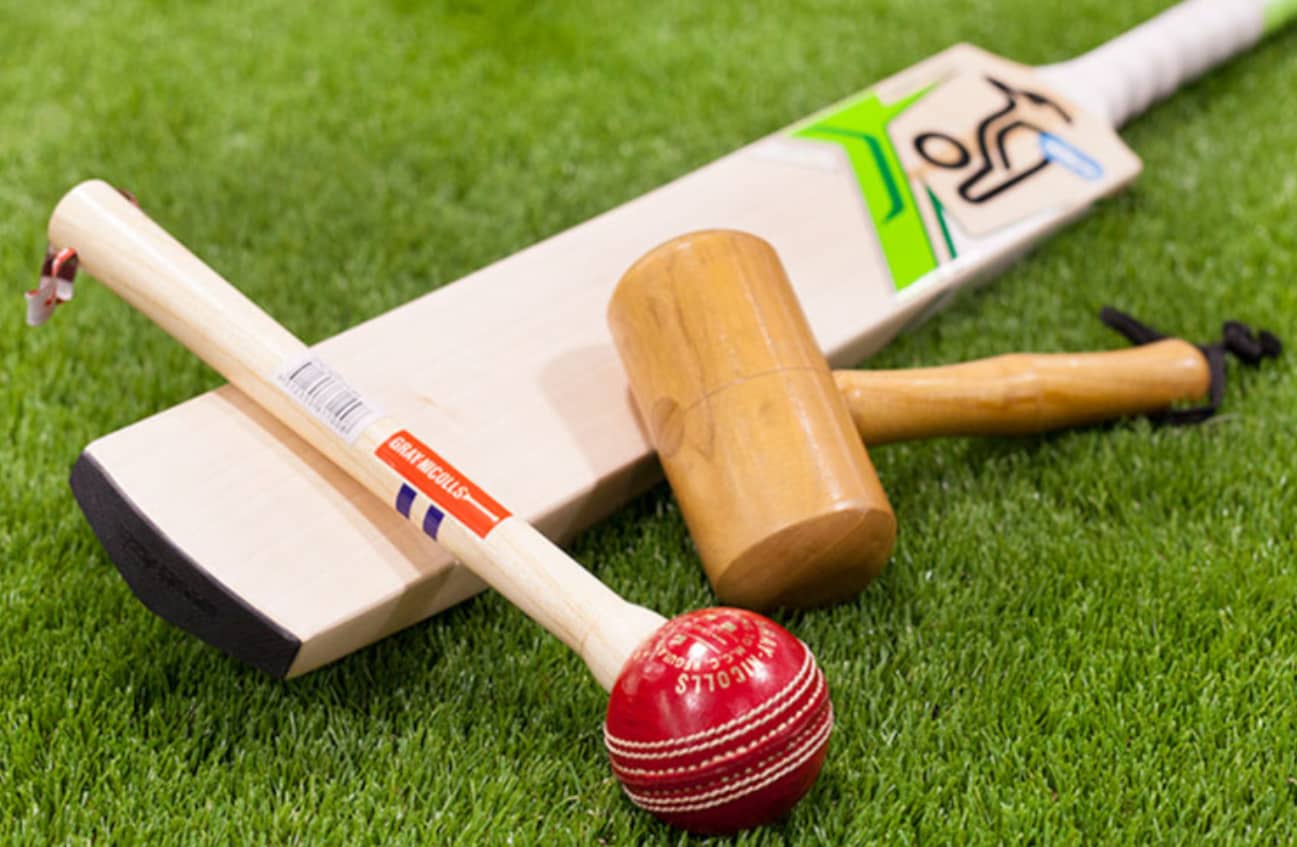
Players selecting preparation methods must balance available time against damage risk and required skill level. Understanding how to knock a cricket bat at home involves choosing among several distinct approaches.
How to knock in a cricket bat with a mallet provides optimal control over force placement and compression intensity. Start with gentle strikes across the face, gradually increasing force over 4-6 hours. Work in systematic grid patterns, ensuring even coverage across all zones. Apply glancing blows to edges, avoiding direct perpendicular strikes.
How to knock in a cricket bat without a mallet requires improvised tools like an old cricket ball inside a sock. Swing the weighted sock against the bat face repeatedly, maintaining consistent force throughout. This method takes longer but achieves acceptable results without specialized equipment purchases.
How to knock in a cricket bat with a ball involves controlled throw-downs or gentle net sessions using heavily worn balls. This natural approach combines practice with preparation but carries a higher inconsistency risk from variable impact angles.
Cricket bat knocking in machine services use motorized compression tools with programmable force settings. Professional operators complete preparation in 2-3 hours with guaranteed consistency across the entire bat surface.
| Method | Force Control | Edge Safety | Time Investment | Skill Required | Damage Risk |
|---|---|---|---|---|---|
| Mallet (DIY) | High with practice | Good if the technique is correct | 4-6 hours | Moderate | Medium |
| Ball-in-Sock (DIY) | Medium | Moderate | 6-8 hours | Low | Medium-High |
| Throw-downs (DIY) | Low | Poor | Multiple sessions | High | High |
| Professional Hand | Very High | Excellent | 2-3 hours | N/A (service) | Very Low |
| Machine Service | Consistent | Excellent | 2-3 hours | N/A (automated) | Very Low |
Questions about how long to knock in a cricket bat depend entirely on the chosen method and willow hardness. Softer grades require extended preparation compared to harder pressing grades.
Step 5: Post-Knocking Protection Choices
Fibre tape application along edges provides mechanical reinforcement against splitting from mishit deliveries. This adds minimal weight while significantly extending edge durability.
Anti-scuff sheets offer face protection but reduce tactile feedback slightly. Players prioritizing longevity over feel benefit most from this option.
Protection timing affects adhesion quality. Apply sheets within 24 hours of knocking completion for optimal bonding to compressed wood surface.
Skip face protection only if direct willow contact matters more than extended lifespan. Unprotected bats provide better feedback but require replacement sooner.
Step 6: Performance Testing Before Match Play
Conduct initial testing using quality old balls with worn seams. New balls are too hard and provide no useful feedback about preparation adequacy.
Complete 20-30 ball contacts during controlled throw-downs at a moderate pace. Monitor the face closely for seam impressions or fiber indentations.
Deep marks or visible compression indicate insufficient preparation. Return to knocking for another 1-2 hours, focusing specifically on marked zones.
Minimal surface marking with good rebound sound confirms adequate preparation. Slight discoloration is normal, but clear dents require additional work.
Why Proper Knocking Improves Bat Longevity?
- Enhanced Structural Integrity Under Impact
Compressed fibers resist cracking from fast bowling and hard ball contact. The bat maintains structural soundness across multiple seasons rather than failing prematurely.
- Optimized Energy Transfer to Ball
Hardened wood surfaces redirect impact force more efficiently. Shots travel further with identical swing mechanics compared to unprepared equipment.
- Expanded Effective Hitting Zone
Consistent compression across the face increases the area producing quality shots. Off-center strikes still generate acceptable ball speed and distance.
- Reduced Handle Vibration Transmission
Prepared fibers absorb impact shock before reaching the handle. Extended batting causes less hand strain and wrist discomfort.
- Extended Economic Value
Initial preparation time prevents repair costs and premature replacement needs. Well-maintained bats deliver superior return on investment.
What Happens If You Skip Knocking In?
- Immediate Structural Failure Risk
Unprepared willow cannot withstand ball impact forces. Surface cracks appear within first deliveries, particularly on edges and toe.
- Accelerated Performance Degradation
Loose fibers compress unevenly under match conditions. The bat develops dead spots that absorb rather than transfer impact energy.
- Excessive Physical Discomfort
Every ball contact sends strong vibration through hands and wrists. Extended play causes significant discomfort and potential injury.
- Poor Cost-Benefit Ratio
Premium willow provides no advantage without proper preparation. The bat fails to deliver expected performance regardless of purchase price.
- Premature Replacement Necessity
Unprepared bats require replacement after minimal use. Single-season lifespan replaces expected multi-season durability.
FAQs
- Is it necessary to knock in a cricket bat?
All English willow bats require knocking before match use. Kashmir willow is more durable but still benefits from preparation to prevent edge damage.
- Which oil is used for bat knocking?
Raw linseed oil is standard. Avoid boiled linseed oil or wood treatments containing additives that affect natural willow properties.
- How long should I knock my bat in for?
Minimum 4 hours with manual methods. Professional services complete preparation in 2-3 hours. Ball methods require 6-8 hours across multiple sessions.
- How does knocking in a bat work?
Controlled force compresses wood fibers, increasing surface density and hardness. The process strengthens willow while maintaining necessary flexibility.
- Can we knock a bat without oiling?
Oiling first is strongly recommended. Dry wood lacks flexibility and suffers a higher cracking risk during compression.
- How to properly knock a bat?
Start with light force, gradually increasing over time. Work systematically across the face, paying special attention to edges using glancing blows.
- How to tell if a bat is knocked in?
Test with old balls during practice. Minimal seam marks with good rebound indicate proper preparation. Deep indentations require additional work.
Does knocking in improve ping?
Prepared bats produce better sound and response. The “ping” indicates proper compression and optimal energy transfer.
Conclusion:
Selecting how to knock in a cricket bat in 2026 requires matching preparation methods to individual circumstances.
The knocking in of cricket bats remains essential regardless of the chosen approach.
Players with adequate time and confidence can complete home preparation successfully.
Those seeking guaranteed results or working with premium equipment benefit from professional services.
Preparation Timeline by Method:
- DIY mallet approach: 4-6 hours knocking plus oiling/drying time
- Ball-in-sock method: 6-8 hours knocking plus oiling/drying time
- Professional service: 2-3 hours total with pickup/dropoff
- Machine service: 2-3 hours automated compression
Begin preparation well before the match schedules. Allow buffer time for retesting if initial results prove inadequate.