If you have come across the word jipinfeiche and had absolutely no idea what it meant, you are not alone.
At first glance, it looks like a made-up string of syllables.
Search it cold, and the results are a mix of gaming forums, obscure blogs, and content that circles the same vague explanation without ever getting specific.
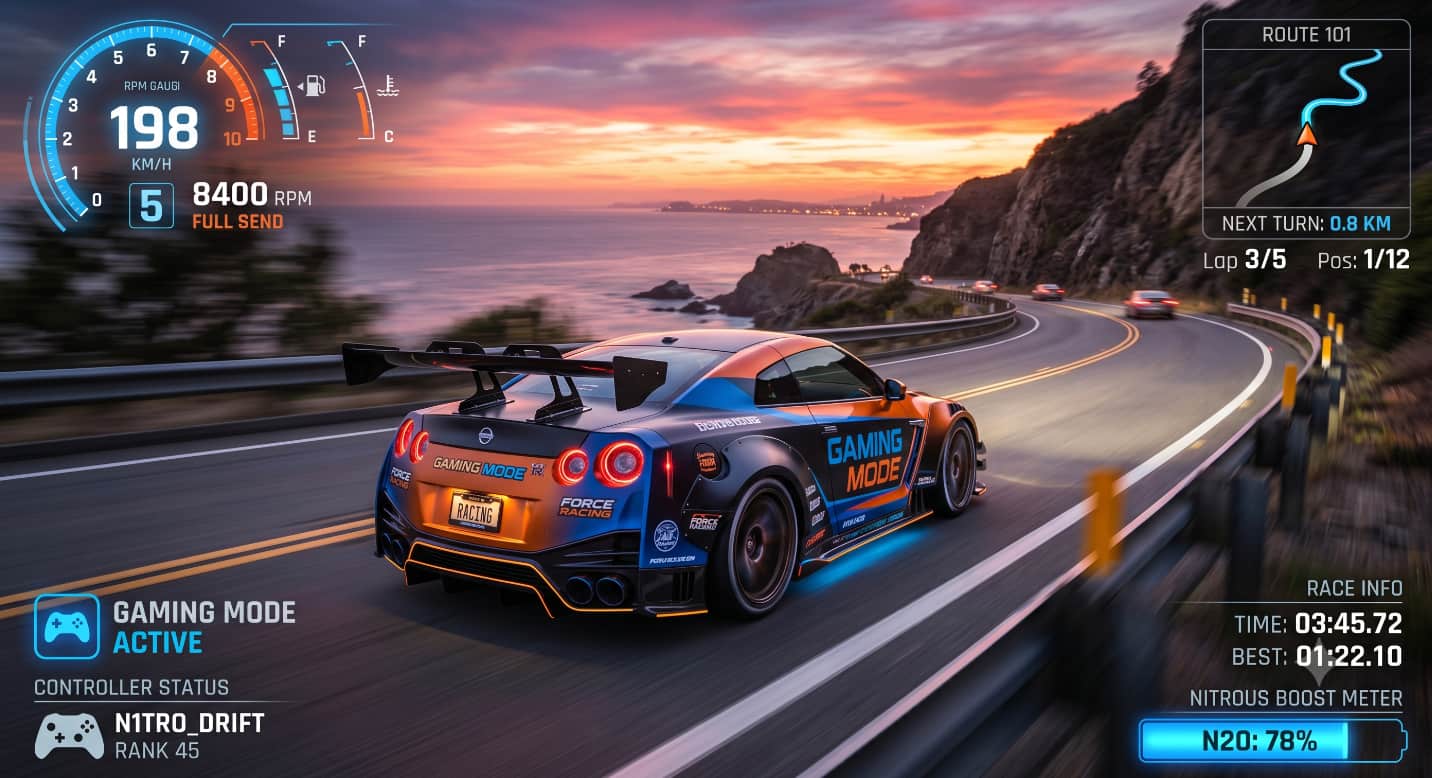
Here is the short version: jipinfeiche is the pinyin romanisation of the official Chinese name for the Need for Speed racing game franchise.
The characters break down to mean something close to “elite speed vehicle” or “premium racing car.”
That is the core of it. But there is more to the story.
Contents
- 1 Jipinfeiche
- 1.1 What Does Jipinfeiche Actually Mean?
- 1.2 The Need for Speed Connection
- 1.3 How Jipinfeiche Spread Online?
- 1.4 What the Chinese Localisation of Racing Games Tells Us?
- 1.5 Is Jipinfeiche a Company or a Brand?
- 1.6 Jipinfeiche and Car Culture Beyond Gaming
- 1.7 Pinyin and Why Chinese Keywords Go Global
- 1.8 Common Misconceptions Worth Clearing Up
- 1.9 Conclusion:
Jipinfeiche
Understanding why this term exists, how it spread, and what it signals about Chinese gaming culture is worth knowing, whether you play racing games, follow esports, or simply find yourself confused by a keyword that keeps turning up in your feed.
What Does Jipinfeiche Actually Mean?
The word itself is made up of two parts. The first part means top-grade, premium, or elite — used in Mandarin to describe something of outstanding quality.
The second part means a speeding car or a flying vehicle. Together, they produce something like “top-grade speed car” or “elite racer.”
In pinyin — the system used to write Mandarin sounds in the Latin alphabet — the romanised spelling becomes jipinfeiche.
Pinyin strips tonal marks in casual digital use, which is why you will often see it written without accents as a single unhyphenated word.
The name is a genuinely fitting translation. Need for Speed has always been about fast cars pushed to their absolute limit.
“Elite speed car” captures the spirit of the franchise better than a word-for-word rendering of the English title ever would have.
The Need for Speed Connection
Need for Speed launched in 1994 and became one of the best-selling racing game series in history.
When EA brought the franchise to mainland China, the localisation team chose jipinfeiche as the official Chinese title. The name stuck.
For Chinese players, this was the name they grew up with.
Forums, QQ groups, and gaming communities all referred to the series by jipinfeiche rather than the English title.
When those same players started writing in pinyin or speaking about the game to international audiences, jipinfeiche came with them.
That is why, when you search jipinfeiche on any major platform, Need for Speed content dominates the results — YouTube videos of high-speed chases in Underground 2, discussion threads about Most Wanted, and mobile game guides all cluster under this keyword.
For a large segment of the global gaming audience, searching for jipinfeiche is simply another way to look up Need for Speed.
How Jipinfeiche Spread Online?
The Scale of Chinese Gaming
China has one of the largest gaming markets in the world. Hundreds of millions of active players engage with racing games, mobile titles, and esports competitions every year.
As Chinese gaming culture has grown internationally, the terminology that comes with it — including jipinfeiche — has followed.
Short-Form Video and Racing Content
Drifting clips, supercar showcases, and street racing simulations are among the most consistently viral categories on TikTok, YouTube Shorts, and Bilibili.
Creators who publish this content frequently use Chinese gaming terms in their titles and hashtags, both for accuracy and because unusual foreign words tend to attract clicks out of curiosity alone. Jipinfeiche benefits from exactly this dynamic.
The Mystery Keyword Effect
The word is phonetically unfamiliar to English speakers. That unfamiliarity is itself a driver of search volume.
People encounter the term, do not know what it refers to, and look it up. That curiosity loop is one reason the keyword has gained SEO traction even in regions with no direct connection to Chinese gaming culture.
What the Chinese Localisation of Racing Games Tells Us?
The choice to give Need for Speed a fully translated Chinese title rather than a phonetic approximation of the English reflects a broader pattern in how international games are released in China.
Publishers adapt titles to feel native rather than foreign.
The goal is for a player to read the Chinese name and immediately understand the product, without needing to know the original English version at all.
This approach has produced some memorable localisations. World of Warcraft was renamed to mean “World of Magic Beasts.”
League of Legends became “League of Heroes.” Each translation was crafted to land naturally in Mandarin, not just phonetically approximate the English.
Jipinfeiche follows the same logic. It says exactly what the game is: elite cars, moving fast.
Is Jipinfeiche a Company or a Brand?
This question comes up frequently. The short answer is no — there is no globally recognised company or independent product officially called Jipinfeiche in the international market.
Some websites use the term as though it refers to a standalone platform or technology concept.
These uses are typically SEO-driven and do not reflect any official branding. The term’s primary and most documented meaning remains the Chinese title for Need for Speed.
Any content that presents jipinfeiche as a separate company or app should be treated with scepticism unless it includes verifiable sources.
Jipinfeiche and Car Culture Beyond Gaming
Part of what keeps the keyword circulating is that the concept it describes — premium cars moving at extreme speed — resonates well beyond the gaming audience.
Automotive enthusiasts, motorsport fans, and supercar communities share content using similar language, and jipinfeiche fits neatly into that world.
The phrase carries connotations of performance and quality that go beyond a game title. It sounds like what it means: something fast, something elite, something worth paying attention to.
That is probably why certain content creators use it symbolically when discussing real-world cars, EV performance, or high-speed racing culture, even when the Need for Speed franchise is nowhere in the conversation.
Pinyin and Why Chinese Keywords Go Global
Chinese internet users often type in pinyin rather than characters, particularly on international platforms where Chinese input methods are not the default.
Terms like Douyin, Xiaohongshu, and Wangzhe Rongyao circulate in pinyin form across English-language platforms for exactly this reason.
Jipinfeiche follows the same pattern. It is the romanised spelling that allows the term to function as a searchable keyword on Google, YouTube, Reddit, and elsewhere.
The romanised versions travel globally while the original character forms stay on Chinese-language platforms.
This is worth understanding if you are doing keyword research in any niche that intersects with Chinese-origin products, games, or culture.
The pinyin version of a term often carries significant search volume in markets far outside China.
Common Misconceptions Worth Clearing Up
- It is not a new car brand. No verified automotive manufacturer uses jipinfeiche as an official international brand name.
- It is not a cryptocurrency. Some speculative SEO content has attempted to connect the term to blockchain projects. There is no credible basis for this.
- It is not a standalone gaming app. While numerous mobile racing games carry themes aligned with the jipinfeiche franchise, no globally dominant standalone app operates under the jipinfeiche name in English-speaking markets.
- It does not have a single fixed meaning. Language online rarely stays contained. The term has picked up broader associations with speed culture, car enthusiasm, and digital performance — uses that have drifted from the original translation but are not entirely disconnected from it either.
Conclusion:
Jipinfeiche is the pinyin romanisation of the official Chinese title for Need for Speed.
It means elite racing car, and it was chosen as a title because it communicates exactly what the franchise delivers — premium cars, extreme speed, competitive edge.
The reason the keyword appears in so many places online is straightforward: China has a massive gaming audience, Chinese gaming culture has global reach, and pinyin keywords travel well across international platforms.
When millions of players grow up calling a game by one name, that name does not stay contained to a single country.
If you were searching for a clear explanation, that is it. If you were wondering whether it points to something more — a company, a product, a trend — the honest answer is mostly no.
It is a game title with a satisfying translation, and it has taken on a life of its own online because that is what resonant words tend to do.
Also Check: