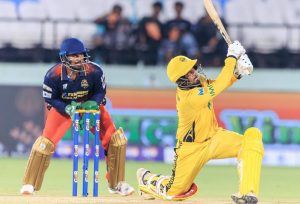
Cricket fans often debate which venue truly dominates in size.
You’ll find that the largest cricket stadium in the world by boundary isn’t just about capacity. It’s about the playing area itself.
Boundary length shapes how batters attack and bowlers strategize.
Massive boundaries test fitness and shot selection. Smaller ones favor aggressive strokeplay and higher scores.
Contents
- 1 Largest Cricket Stadium in the World By Boundary
- 1.1 Quick Summary:
- 1.2 How We Rank Cricket Grounds by Boundary?
- 1.3 Top 10 Largest Cricket Stadiums in the World By Boundary
- 1.3.1 #1 Melbourne Cricket Ground, Australia
- 1.3.2 #2 Sydney Cricket Ground, Australia
- 1.3.3 #3 Singhalese Sports Club Cricket Ground, Colombo, Sri Lanka
- 1.3.4 #4 Hagley Oval, Christchurch, New Zealand
- 1.3.5 #5 Basin Reserve, Wellington, New Zealand
- 1.3.6 #6 Lord’s Cricket Ground, London, United Kingdom
- 1.3.7 #7 Imperial Wanderers Stadium, Johannesburg, South Africa
- 1.3.8 #8 Kensington Oval, Bridgetown, Barbados
- 1.3.9 #9 Eden Gardens, Kolkata, India
- 1.3.10 #10 Narendra Modi Stadium (Motera), Ahmedabad, India
- 1.3.11 #11 Eden Park, Auckland, New Zealand
- 1.4 Understanding Boundary Length Variations
- 1.5 How Pitch Selection Affects Boundaries?
- 1.6 Expert Analysis: Why Boundary Size Matters?
- 1.7 Stadium Size Comparison: Key Insights
- 1.8 Frequently Asked Questions
- 1.9 Final Thoughts:
Largest Cricket Stadium in the World By Boundary
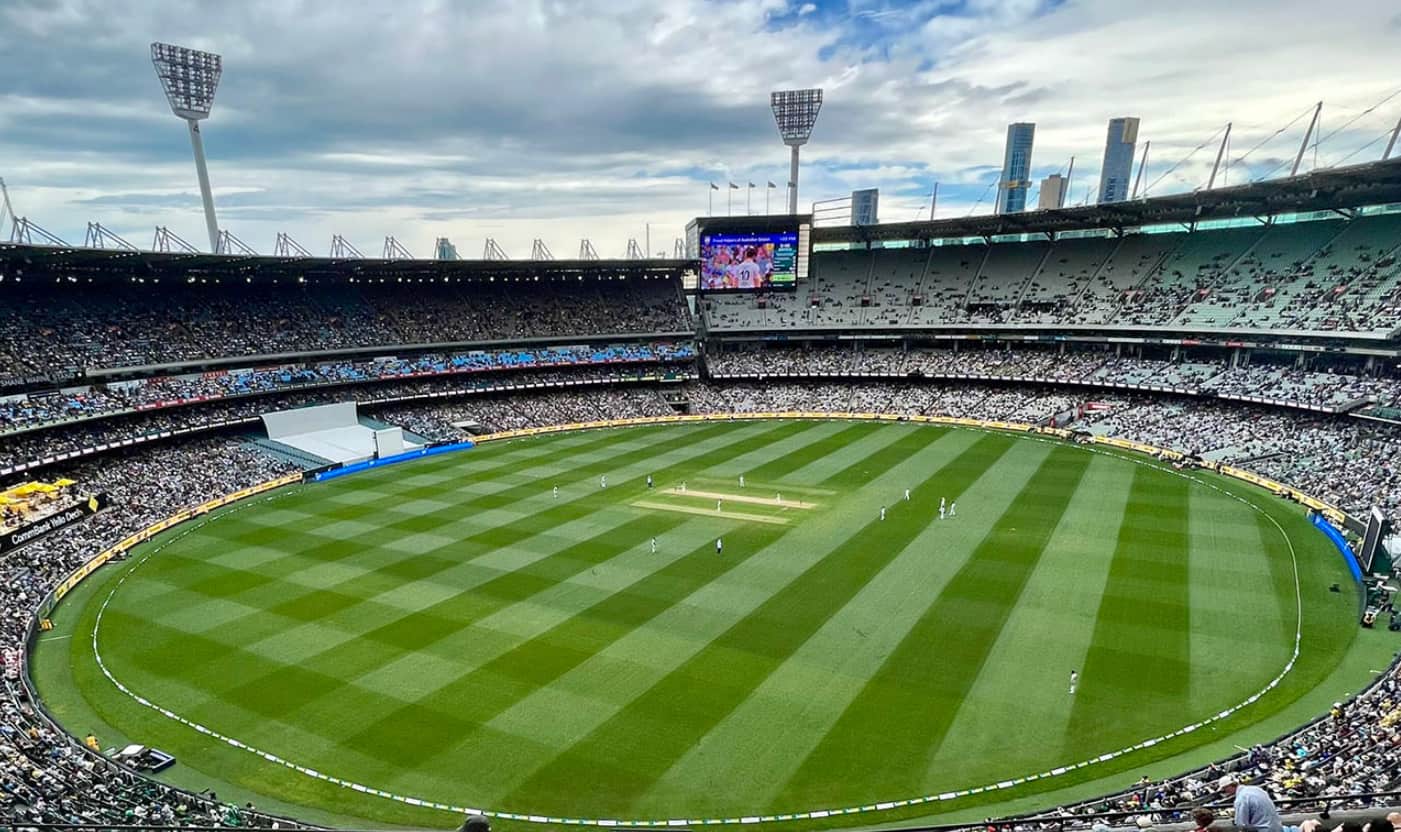
This guide ranks the top 10 biggest cricket ground by boundary length in world cricket.
You’ll discover exact measurements, historical context, and what makes each venue unique.
Quick Summary:
Key takeaways about the largest cricket stadiums in the world by boundary:
- Melbourne Cricket Ground leads with 83.43m straight boundaries and 86.235m square boundaries
- Australian and New Zealand grounds dominate the top positions
- Boundary dimensions vary between formats (Test vs T20)
- Larger boundaries create more balanced contests between bat and ball
- Ground selection impacts match strategy significantly
How We Rank Cricket Grounds by Boundary?
Rankings use two measurements: straight boundaries and square boundaries. The playing surface is determined by multiplying these dimensions.
Final totals represent combined scores from both criteria. We start with the biggest venues first.
Boundary length affects every aspect of play. Longer boundaries reward placement over power. Shorter ones encourage six-hitting and aggressive cricket.
Top 10 Largest Cricket Stadiums in the World By Boundary
#1 Melbourne Cricket Ground, Australia
- Straight Boundary: 83.43 metres
- Square Boundary: 86.235 metres
The MCG staged cricket’s first test match in 1877. Australia faced England on this historic ground. The stadium has transformed dramatically since that opening contest.
Changes over the decades created the biggest playing area by boundary in world cricket. The Centenary Test happened here in 1977, marking 100 years of test cricket.
Boxing Day tests at the MCG are a tradition. Whichever nation tours Australia during the summer plays here. The massive boundaries make scoring runs a genuine challenge.
#2 Sydney Cricket Ground, Australia
- Straight Boundary: 93.72 metres
- Square Boundary: 72.825 metres
Australian grounds feature impressive playing surfaces regularly. The SCG stands out with a 93-metre straight boundary. You won’t see that measurement often in modern cricket.
T20 matches typically bring boundaries in closer. The traditional New Year test happens here annually. Rugby league also uses this multi-purpose venue.
Large surface areas allow different sports to share the same ground. The SCG remains one of cricket’s most recognizable stadiums globally.
#3 Singhalese Sports Club Cricket Ground, Colombo, Sri Lanka
- Straight Boundary: 86.095 metres
- Square Boundary: 77.02 metres
The SSC serves as Sri Lankan cricket’s headquarters. Established in 1952, it became the nation’s first test venue. New Zealand visited for that inaugural match in 1984.
A famous ODI unfolded here during Zimbabwe’s 2001/02 tour. Chaminda Vaas recorded 8/19, the best ODI bowling figures ever. Zimbabwe managed just 38 runs, the lowest ODI total then.
Those wide boundaries contributed to the collapse. Batters couldn’t clear the rope easily. Vaas exploited conditions perfectly on the expansive surface.
#4 Hagley Oval, Christchurch, New Zealand
- Straight Boundary: 83.575 metres
- Square Boundary: 77.455 metres
Cricket started at Hagley Oval in 1867. But test matches didn’t arrive until December 2014. New Zealand previously used Lancaster Park for Christchurch fixtures.
Lancaster Park couldn’t handle modern international cricket’s demands. The replacement ground offers much more playing space. The surface area expanded significantly from the old venue.
Hagley Oval now hosts regular international fixtures. The boundaries stretch far enough to test even powerful hitters.
#5 Basin Reserve, Wellington, New Zealand
- Straight Boundary: 81.7 metres
- Square Boundary: 72.48 metres
The Basin Reserve sits in an unusual spot. It’s effectively in the middle of a roundabout in Wellington. Long boundaries on all sides make batting difficult.
Windy conditions add another challenge for batters. The ground holds heritage status in New Zealand. England played the first test here in 1930.
Every touring nation should expect to play at this historic venue. The combination of wind and boundaries creates unique playing conditions.
#6 Lord’s Cricket Ground, London, United Kingdom
- Straight Boundary: 88.865 metres
- Square Boundary: 65.21 metres
Lord’s represents cricket’s spiritual home for English supporters. Large playing surfaces suit test cricket better than small boundaries. Hitting fours and sixes requires genuine skill here.
The famous slope runs from north to south. It drops 2.5 metres across the playing area. Visiting batters must adjust to this unusual feature.
The slope and boundaries combine to favor bowlers. Lord’s maintains traditional cricket values through its dimensions.
#7 Imperial Wanderers Stadium, Johannesburg, South Africa
- Straight Boundary: 86.755 metres
- Square Boundary: 64.135 metres
The Wanderers replaced their predecessor in 1956. South Africa’s first test at the new ground happened that same year. The 2003 World Cup final took place here.
A legendary ODI occurred in 2006. Australia scored 434 runs batting first. South Africa chased down that total successfully. The match became one of cricket’s greatest games.
Wide boundaries didn’t prevent high scoring that day. Both teams attacked brilliantly despite the distances involved.
#8 Kensington Oval, Bridgetown, Barbados
- Straight Boundary: 76.645 metres
- Square Boundary: 69.03 metres
Kensington Oval has evolved significantly over the decades. New stands appeared, the scoreboard changed, and the pavilion got updated. The vast surface area remained constant throughout.
The first test happened here in 1930. Major renovations came before the 2007 World Cup. The ground maintains its character despite modernization.
Caribbean cricket history lives at this Barbados venue. The boundaries respect traditional test cricket dimensions.
#9 Eden Gardens, Kolkata, India
- Straight Boundary: 76.23 metres
- Square Boundary: 66.26 metres
Eden Gardens ranks among India’s most historic stadiums. It’s the country’s oldest test venue. England played the inaugural match in 1934.
The 1987 World Cup final happened here. It was the first final held outside England. The World T20 final arrived in 2016.
Major cricket moments continue at this Kolkata venue. The boundaries provide a fair contest between bat and ball.
#10 Narendra Modi Stadium (Motera), Ahmedabad, India
- Straight Boundary: 75 metres
- Square Boundary: 75 metres
Initial dimensions weren’t confirmed when the stadium opened. We knew it would be the world’s largest by capacity. Playing surface details came later.
The venue hosted its first test in 2021. The IPL final happened here a year later. Dimensions are now confirmed at 180 x 150 yards.
Both straight and square boundaries measure 75 yards. This creates symmetrical playing conditions. The ground has established itself among cricket’s premier venues.
#11 Eden Park, Auckland, New Zealand
- Straight Boundary: 64.89 metres
- Square Boundary: 68.535 metres
New Zealand grounds appear frequently on this list. Many serve multiple sports, including rugby and football. A multi-purpose design might explain the larger surfaces.
Eden Park sits at the bottom of our rankings. The dimensions remain impressive despite the lower position. New Zealand played its first test here in 1930.
The 2015 World Cup featured this ground notably. Auckland’s premier stadium continues hosting major fixtures.
Understanding Boundary Length Variations
| Format | Boundary Strategy | Reasoning |
|---|---|---|
| Test Cricket | Extended to full length | Balanced bat vs ball contest |
| ODI Cricket | Slightly reduced | Encourage run-scoring |
| T20 Cricket | Brought in significantly | Maximize entertainment value |
The entire playing surface doesn’t always constitute the boundary. Teams adjust boundaries according to the match format.
Test cricket needs a balance between batting and bowling. Boundaries extend to full field length. This creates fair conditions for both disciplines.
ODI and T20 matches bring boundaries closer. Spectators want more runs and aggressive batting. Shorter boundaries deliver that entertainment.
How Pitch Selection Affects Boundaries?
Cricket squares contain multiple pitches. Bigger grounds might have 14 or more options. Different pitches get used across a season.
Using the same square repeatedly isn’t practical. Rotation keeps surfaces fresh and playable. This creates variation in boundary length.
One side of the ground often has a shorter boundary. Batters target that area aggressively. Bowlers must defend it carefully.
Changing boundary lengths adds tactical complexity. Captains adjust field placements accordingly. Strategic thinking becomes more important.
Expert Analysis: Why Boundary Size Matters?
Boundary dimensions shape entire match strategies. Longer boundaries favor Test cricket’s traditional values. You need timing, placement, and fitness to score runs.
Shorter boundaries suit limited-overs formats better. Power-hitting becomes more valuable. Six-hitting specialists thrive in compact venues.
Fielding teams spread out differently on large grounds. Saving ones and twos matters more. Small grounds demand aggressive field positions.
Bowlers adjust lengths based on boundary distance. Wider boundaries allow fuller deliveries. Batters can’t clear the rope easily on mishits.
Ground conditions interact with boundary size. Wind at Basin Reserve makes long boundaries harder. The MCG’s size tests stamina over five days.
Stadium Size Comparison: Key Insights
Australian venues dominate the upper rankings. The MCG and SCG feature prominently. New Zealand contributes several grounds to the top 10.
Asian cricket has entered the conversation recently. The Narendra Modi Stadium shows modern stadium development. Indian cricket infrastructure continues expanding.
Historical venues like Lord’s and Eden Gardens maintain relevance. Traditional grounds still offer proper test cricket dimensions. Modern upgrades haven’t compromised playing areas.
Caribbean cricket preserves its heritage through Kensington Oval. Barbados maintains test cricket’s traditional values. The boundaries reflect that commitment.
Which is the biggest cricket stadium in the world by boundary? The Melbourne Cricket Ground holds that title. Its combined measurements exceed all competitors.
Frequently Asked Questions
- Which is the biggest cricket stadium in the world by boundary?
The Melbourne Cricket Ground has the largest boundaries. Straight boundaries measure 83.43 metres, and square boundaries reach 86.235 metres. Combined measurements make it the world’s biggest by playing area.
- Do boundaries change between cricket formats?
Yes, boundaries get adjusted for different formats. Test matches use full-length boundaries. T20 games bring them significantly closer to encourage more runs.
- Why do Australian grounds have such large boundaries?
Australian grounds often serve multiple sports. Cricket, Australian rules football, and rugby share venues. Multi-purpose design creates larger playing surfaces.
- How does boundary size affect match strategy?
Large boundaries favor placement over power. Fielding teams can save more runs easily. Small boundaries encourage aggressive batting and six-hitting.
- What are the top 10 biggest cricket ground by boundary length in world cricket?
Melbourne Cricket Ground leads, followed by Sydney Cricket Ground, SSC Colombo, Hagley Oval, Basin Reserve, Lord’s, Wanderers Stadium, Kensington Oval, Eden Gardens, and Narendra Modi Stadium complete the top 10.
Final Thoughts:
The largest cricket stadium in the world by boundary is the Melbourne Cricket Ground.
Its massive playing surface creates unique challenges for players. Boundary dimensions shape every aspect of cricket strategy.
Australian and New Zealand grounds dominate the rankings. Historical venues maintain their relevance alongside modern stadiums.
The largest cricket stadiums in the world by boundary preserve test cricket’s traditional values.
Understanding boundary measurements helps you appreciate cricket better. Venue selection impacts match outcomes significantly.
The biggest grounds demand different skills from players and different strategies from captains.