Open any cricket schedule, and you’ll find it: a single match between two countries, sitting on the calendar with nothing before it and nothing after.
No series label. No “1st of 3.” Just one game.
That’s a one-off, and cricket has been built on them for longer than most fans realise.
New nations earn their Test debut through a one-off fixture. Boards fill narrow tour windows with a single match.
The biggest prize in ODI cricket is settled by one game every four years.
Contents
- 1 One-Off Tournaments
- 1.1 Quick Answer:
- 1.2 What One-Off Tournaments Actually Are?
- 1.3 Six Reasons Boards Schedule One-Off Events
- 1.4 One-Off Tests: The Full Picture
- 1.5 One-Off ODIs and T20Is
- 1.6 One-Off Tournament Standings: Format Decides Everything
- 1.7 One-Off Tournament Schedule: How Fixtures Get Confirmed?
- 1.8 One-Off Tournaments in India
- 1.9 One-Off Tournaments in Asia
- 1.10 One-Off Tournament Stats: What Counts in the Record Books?
- 1.11 One-Off Tournaments in 2026: What’s Coming?
- 1.12 FAQs
- 1.13 Conclusion:
One-Off Tournaments
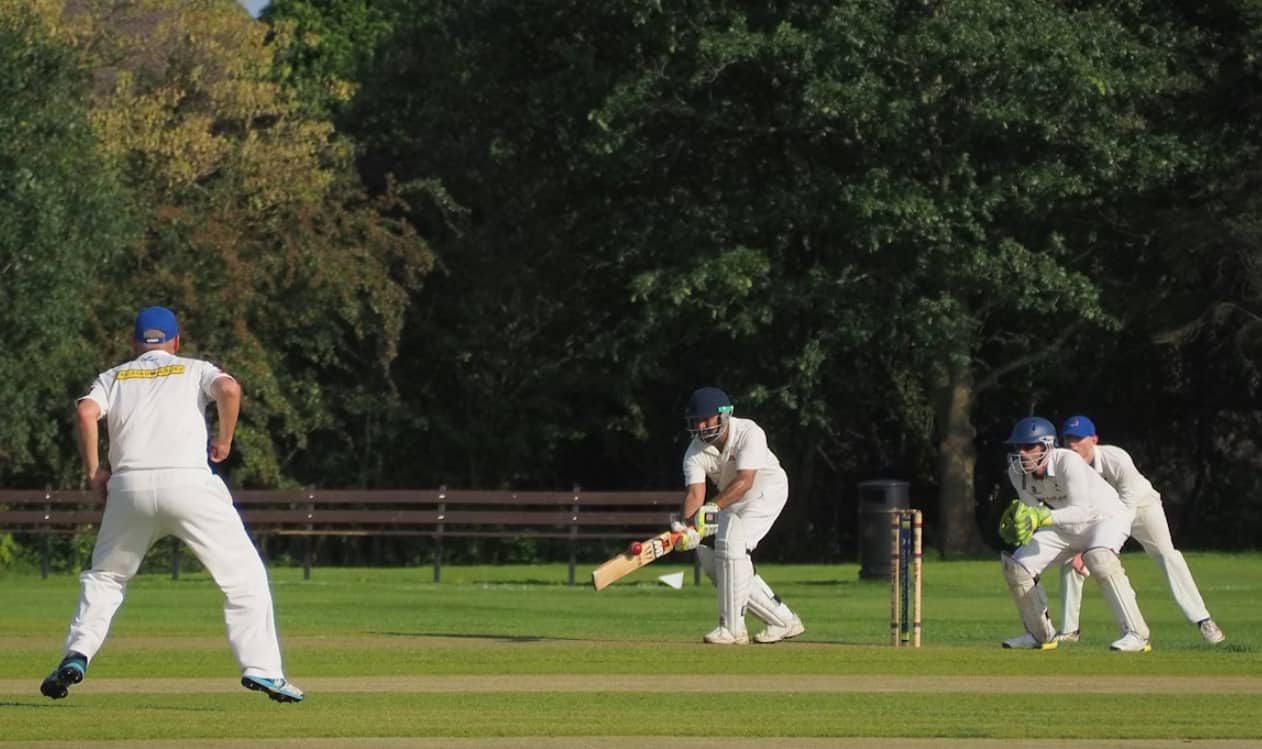
One-off tournaments and matches aren’t secondary to cricket’s main events. In many cases, they are the main event.
Quick Answer:
A one-off tournament in cricket is a standalone competition with no fixed annual recurrence. It may be a single match between two nations or a short event like a tri-series with a final. All ICC-sanctioned fixtures count fully toward team rankings, player statistics, and career records.
What One-Off Tournaments Actually Are?
“One-off” is straightforward. It happens once, on its own, outside the structure of a longer series.
In cricket, this takes a few shapes:
- One-off Test: A single Test match, not part of a 2, 3, or 5-match series. Stands alone on the bilateral tour schedule.
- One-off ODI or T20I: A limited-overs international played as a single fixture. Not attached to a series running either side of it.
- One-off tournament: A short competition with 3 or 4 teams, a group stage, and a final, typically lasting 7 to 14 days. It doesn’t appear on the next year’s calendar as a scheduled repeat.
The important detail: these are not unofficial or exhibition matches. When the ICC sanctions them, they count for everything. Rankings, averages, milestones, career records. The same as any other international fixture.
Six Reasons Boards Schedule One-Off Events
One-off fixtures happen for clear, specific reasons. Here are the most common:
- 1. The tour window is short. The FTP calendar is dense. When a tour has room for one match and not a full series, that one match gets scheduled and played.
- 2. A country is making its Test debut. New Full Members of the ICC almost always open with a one-off Test. Afghanistan’s debut against India in 2018 and Ireland’s debut against Pakistan the same year were both standalone fixtures.
- 3. The occasion deserves it. Bangladesh’s 100th Test, scheduled as a one-off against India in 2015, was a milestone that fit better as its own event than as part of a routine series.
- 4. Boards are testing something. New playing conditions, unusual team combinations, or experimental formats are easier to trial in a single fixture than across a full series.
- 5. Logistics or budget won’t support more. Smaller boards, long travel distances, or neutral venue costs can make a full bilateral series impractical. One match is more manageable.
- 6. Commercial events. Stand-alone fixtures between top nations can be commercially packaged as single special events, particularly in white-ball formats.
One-Off Tests: The Full Picture
What Changes When It’s a Single Match?
The rules are identical. Five days, two innings each, all standard playing conditions. What changes is the strategic pressure.
In a multi-match series, captains think across games. A conservative first match can set up a more aggressive second. A batter out of form has time to find it. None of that applies in a one-off Test.
From ball one, both teams are in a must-perform situation. Declarations tend to come earlier. Bowling attacks are used more aggressively from the start. Field settings take fewer risks with defensive patterns. There’s simply no reason to save anything.
Three One-Off Tests That Stood Out
- Afghanistan vs India, Bengaluru, 2018 Afghanistan’s first Test match at the full international level. India won in two days. The result was emphatic, but the occasion was the fixture’s real significance. A new nation playing its debut Test is rare enough to remember regardless of the scoreline.
- India vs Bangladesh, Fatullah, 2015 Bangladesh’s 100th Test. Rain affected most of the game, and a draw was the result. The number mattered more than the outcome. A standalone fixture gave that milestone the space it needed.
- Afghanistan vs New Zealand, Greater Noida, 2024 Afghanistan’s first scheduled Test against New Zealand. Rain made the entire match unplayable from start to finish. No play at all. The fixture was abandoned, but the fact it was on an international schedule shows how much Afghanistan’s Test programme has developed.
One-Off ODIs and T20Is
Notable Stand-Alone ODIs
- World XI vs Australia, Melbourne, 2005 (ICC Super Series) The ICC assembled a full World XI squad to face Australia across a short series, including a one-off ODI. Australia dominated. The concept of a World XI match generates consistent debate about whether it should return as a regular fixture.
- England vs New Zealand, Lord’s, 2019 (World Cup Final) Every World Cup final is a one-off match by definition. The 2019 edition is the sharpest example of what a single game can produce. The match tied. The Super Over tied. England won on boundary count. One game, one result, permanent record.
Stand-Alone T20Is
- Australia vs South Africa, Johannesburg, 2006. The only T20I on that tour, played when the format was still an experiment in international cricket. It has developed significantly since that match.
One-off T20Is are now common as ICC event warm-ups, tribute fixtures, and season openers. They fit tight scheduling windows better than any other format, which makes them the most practical choice for boards arranging a single standalone international.
One-Off Tournament Standings: Format Decides Everything
Whether a standings table exists depends entirely on how many teams are involved.
- Two teams, single match: No standings table. One result is the end of the competition.
- Tri-series (3 teams): Each team plays the other two once. Points and net run rate decide who reaches the final.
- Four-team event: Mini group stage with knockout rounds. Standings apply to the group phase only.
A typical tri-series standings table:
| Team | Played | Won | Lost | Points | NRR |
|---|---|---|---|---|---|
| Team A | 2 | 2 | 0 | 4 | +1.12 |
| Team B | 2 | 1 | 1 | 2 | +0.43 |
| Team C | 2 | 0 | 2 | 0 | -1.55 |
Net run rate breaks ties in the group stage. The final is a straight knockout, regardless of group performance.
One-Off Tournament Schedule: How Fixtures Get Confirmed?
Stand-alone events are typically confirmed a few months in advance. They slot into FTP gaps between bilateral series and major tournaments. A short tri-series or multi-team event runs across 10 to 14 days.
| Day | Fixture | Venue | Local Time |
|---|---|---|---|
| Day 1 | Team A vs Team B | Dubai | 7:30 PM |
| Day 4 | Team B vs Team C | Sharjah | 3:30 PM |
| Day 7 | Team A vs Team C | Abu Dhabi | 7:30 PM |
| Day 10 | Final | Dubai | 7:30 PM |
The ICC’s official website and ESPNcricinfo’s fixtures section carry confirmed schedules as soon as boards announce them.
One-Off Tournaments in India
India’s calendar includes more high-profile one-off fixtures than most other nations.
Partly because of scheduling, mostly because any India match draws a large enough audience to make a single standalone game commercially viable on its own terms.
The BCCI uses one-off T20Is as ICC event warm-ups. The domestic cricket calendar has also seen season-opening challenge matches, typically a reigning IPL champion against a combined India XI.
These are one-off events by structure: no series, no recurring edition, one game with its own defined result.
One-Off Tournaments in Asia
Asian cricket produces a significant share of one-off fixtures, particularly in neutral venues.
Afghanistan plays many internationals in the UAE, where facilities support high-level cricket more reliably than home conditions currently allow.
Pakistan used the UAE as a base for years when hosting at home was difficult.
The Asia Cup periodically takes a condensed form that functions as a one-off tournament rather than a full recurring competition.
Fewer teams, shorter window, single final. The structure is different from the full edition but still carries ACC and ICC recognition.
One-Off Tournament Stats: What Counts in the Record Books?
Every ICC-sanctioned one-off fixture feeds directly into the official records.
A Test century in a standalone match sits in the same career batting record as one from a five-match series.
A five-wicket haul in a one-off ODI counts the same as one from a tri-series. Rankings update after every official fixture, one-off or otherwise.
For players chasing career milestones, a one-off match is a full opportunity.
100 Test caps, 10,000 ODI runs, 200 T20I wickets: all reachable in a standalone fixture.
The game’s context is temporary. The record it produces is not.
One-Off Tournaments in 2026: What’s Coming?
Several boards are building one-off events into their 2026 schedules, mostly as preparation for the next ICC event cycle.
- Short tri-series. 7 to 10-day tri-series in FTP gaps are likely to increase. These fit the one-off tournament structure exactly and give teams match practice without a long bilateral commitment.
- Stand-alone white-ball deciders. Some boards have moved from discussing to planning single-match events between top-ranked sides, framed as commercial specials rather than series openers.
- Domestic challenge matches. India and Australia are both expected to run season-opening one-off challenge fixtures before major international windows open.
- Emerging nation fixtures. Afghanistan, Ireland, and Zimbabwe are likely to pick up one-off Tests and white-ball matches against higher-ranked opposition as their programmes continue to develop.
FAQs
- What makes a one-off match different from a series match?
A series match is one game within a multi-game contest. A one-off match is the entire contest. No other games in the same fixture bracket before or after it.
- Do one-off Test matches affect the ICC Test Championship?
ICC World Test Championship points are awarded for series between Full Members. Stand-alone Tests outside the WTC cycle may not contribute points, but they still count for individual rankings and records.
- Which boards schedule the most one-off tournaments?
The BCCI, Cricket Australia, and the ECB schedule the most high-profile ones. Smaller boards like the ACB (Afghanistan) and Cricket Ireland use them as their primary format for gaining international exposure.
- Can one-off fixtures be played at neutral venues?
Yes. Many Asian one-off fixtures, especially involving Afghanistan and Pakistan, are played in the UAE or other neutral locations.
- How do I know if a one-off match has official ICC status?
Check the ICC’s official fixtures page or ESPNcricinfo’s match listing. Official matches are marked with the relevant match type (Test, ODI, T20I) and the boards involved.
- Are one-off tournaments used to trial new playing conditions?
Sometimes. A standalone event with no series pressure is a practical setting for testing rule changes, new ball protocols, or experimental team compositions before wider adoption.
Conclusion:
One-off tournaments don’t need a series structure to carry weight. They carry their own.
A single match with full ICC status, no safety net, and both teams knowing the result is final from the first ball produces a specific kind of cricket.
Not necessarily the most complex. Often the most direct.
That’s the point. The 2019 World Cup Final mattered because it was one game.
Afghanistan’s debut Test mattered because it was the only one.
A stand-alone T20I between top nations matters because there’s no sequel.
If a one-off fixture appears in the schedule, mark it. These games tend to deliver.