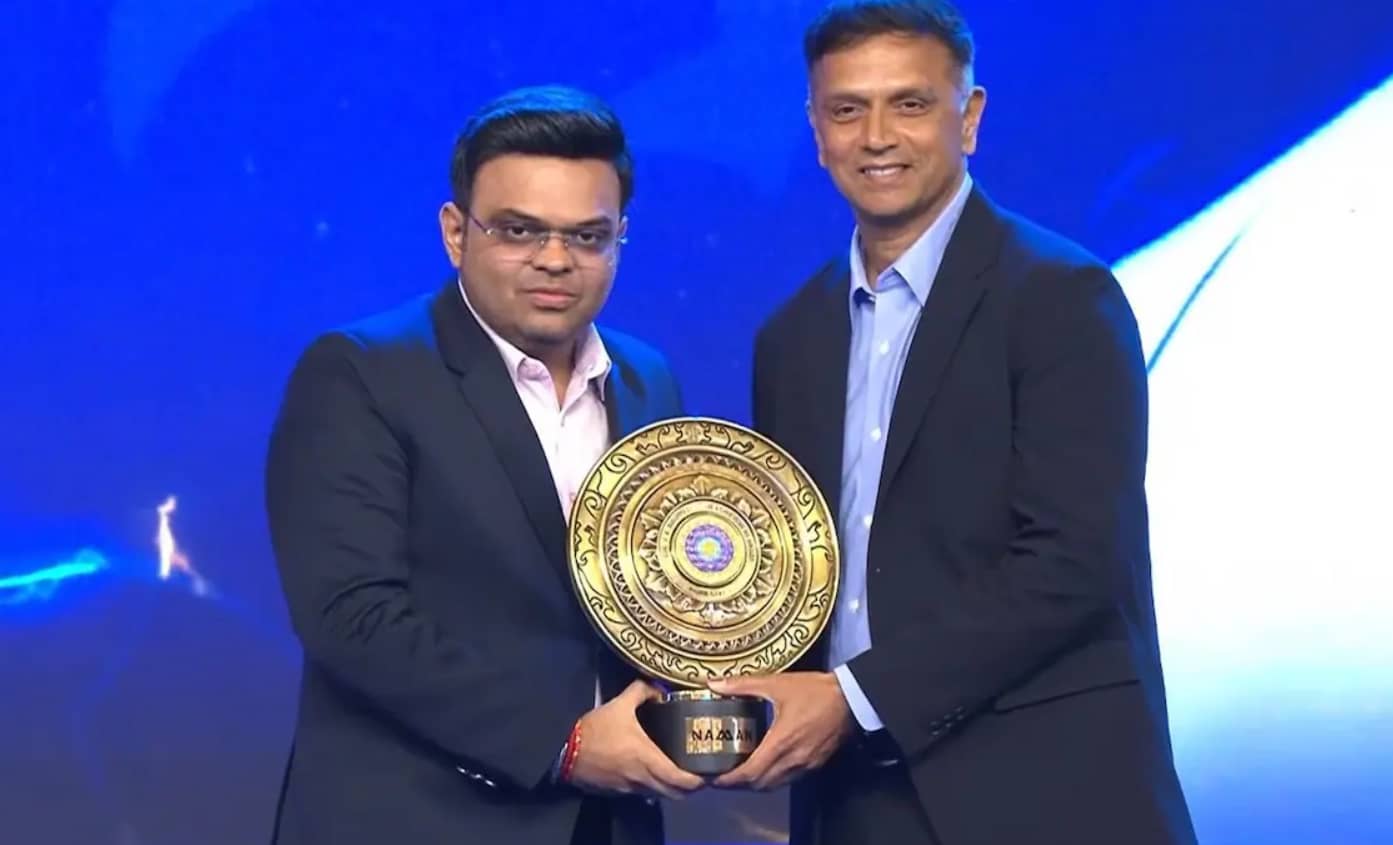
Rahul Dravid’s name gets added to the Indian cricket hall of fame.
The BCCI will present him with the CK Nayudu Lifetime Achievement Award on March 15, 2026, at the NAMAN ceremony in New Delhi.
He becomes the 32nd cricketer to receive this honor.
The award recognizes more than just runs and wickets.
Dravid’s 13,288 Test runs matter, but so does his T20 World Cup coaching triumph in 2024.
The BCCI Lifetime Achievement Award winners list values complete cricket contributions, not just playing stats.
Contents
- 1 BCCI Lifetime Achievement Award Winners List
- 1.1 How does the Award Work?
- 1.2 Complete Winners List of BCCI Lifetime Achievement Award Through 2026
- 1.3 Statistical Breakdown by Player Type
- 1.4 The Missing Years: 2020, 2021, and 2022
- 1.5 Expert Insight: Why Domestic Players Matter?
- 1.6 How 2004 Changed Award History?
- 1.7 My Take: The T20 Question Going Forward
- 1.8 BCCI NAMAN Awards 2026: Full Ceremony Plans
- 1.9 Where to Find the Official Winners List?
- 1.10 Award Timeline Patterns
- 1.11 FAQs
- 1.12 What the Future Holds?
BCCI Lifetime Achievement Award Winners List
How does the Award Work?
The BCCI started this tradition in 1994. They named it after CK Nayudu, who captained India in their first Test match back in 1932.
The award doesn’t come with strict eligibility rules published anywhere, but patterns exist.
Most winners retired 10-20 years before selection. The BCCI wants time to assess the full impact.
Playing achievements form the base, but coaching, administration, and domestic cricket development count too.
Shubman Gill receives the Polly Umrigar Award at the same ceremony.
That’s for the best international cricketer of the year.
Gill led India’s comeback in England while scoring runs himself. Different award, different criteria.
Complete Winners List of BCCI Lifetime Achievement Award Through 2026
The list spans three decades of Indian cricket history. Early selections honored pioneers who built the foundation. Recent winners represent India’s rise to cricket dominance.
| Year | Winner Name | Primary Role | Career Period | Test Matches | Defining Achievement |
|---|---|---|---|---|---|
| 1994 | Lala Amarnath | All-rounder | 1933-1952 | 24 | India’s first Test centurion (118 vs England, 1933) |
| 1995 | Syed Mushtaq Ali | Batsman | 1934-1952 | 11 | First Indian century overseas (112 vs England, Manchester 1936) |
| 1996 | Vijay Hazare | Batsman | 1946-1953 | 30 | India’s first triple century in first-class cricket |
| 1997 | KN Prabhu | Wicketkeeper | 1934-1936 | 5 | India’s wicketkeeping pioneer in early Test era |
| 1998 | Polly Umrigar | Batsman | 1948-1962 | 59 | 3,631 Test runs, India’s leading scorer until 1983 |
| 1999 | Hemu Adhikari | All-rounder | 1947-1959 | 21 | Test captain and influential cricket administrator |
| 2000 | Subhash Gupte | Bowler | 1951-1962 | 36 | 149 wickets, leg-spin master of the 1950s |
| 2001 | Mansoor Ali Khan Pataudi | Batsman | 1961-1975 | 46 | India’s youngest Test captain at age 21 |
| 2002 | BB Nimbalkar | Batsman | 1940s-1950s | 0 | 443 not out in Ranji Trophy (still stands) |
| 2003 | Chandu Borde | All-rounder | 1958-1970 | 55 | 3,061 runs and 52 wickets, reliable middle order |
| 2004 | Bishan Singh Bedi | Bowler | 1966-1979 | 67 | 266 wickets, left-arm spin quartet member |
| 2004 | Srinivas Venkataraghavan | Bowler | 1965-1983 | 57 | 156 wickets, off-spin quartet member |
| 2004 | EAS Prasanna | Bowler | 1962-1978 | 49 | 189 wickets, off-spin quartet member |
| 2004 | BS Chandrasekhar | Bowler | 1963-1979 | 58 | 242 wickets, leg-spin quartet member |
| 2007 | Nari Contractor | Batsman | 1955-1962 | 31 | Survived near-fatal head injury in West Indies 1962 |
| 2008 | Gundappa Viswanath | Batsman | 1969-1983 | 91 | 6,080 runs with elegant strokeplay technique |
| 2009 | Mohinder Amarnath | All-rounder | 1969-1989 | 69 | Man of the Match in 1983 World Cup final |
| 2010 | Salim Durani | All-rounder | 1960-1973 | 29 | Left-arm spin and powerful hitting combination |
| 2011 | Ajit Wadekar | Batsman | 1966-1974 | 37 | Captain of historic 1971 wins in West Indies and England |
| 2012 | Sunil Gavaskar | Batsman | 1971-1987 | 125 | First batsman to reach 10,000 Test runs |
| 2013 | Kapil Dev | All-rounder | 1978-1994 | 131 | 1983 World Cup winning captain, 434 Test wickets |
| 2014 | Dilip Vengsarkar | Batsman | 1976-1992 | 116 | Three Test centuries at Lord’s cricket ground |
| 2015 | Syed Kirmani | Wicketkeeper | 1976-1986 | 88 | 198 dismissals, keeper during India’s rise period |
| 2016 | Rajinder Goel | Bowler | 1957-1985 | 0 | 750+ first-class wickets without playing Tests |
| 2016 | Padmakar Shivalkar | Bowler | 1964-1987 | 0 | 589 first-class wickets, domestic legend |
| 2017 | Pankaj Roy | Batsman | 1951-1961 | 43 | 413-run opening stand with Vinoo Mankad (world record then) |
| 2018 | Anshuman Gaekwad | Batsman | 1974-1987 | 40 | Gritty opener, later successful coach |
| 2019 | Krishnamachari Srikkanth | Batsman | 1981-1992 | 43 | Aggressive opener in 1983 World Cup team |
| 2023 | Farokh Engineer | Wicketkeeper | 1961-1975 | 46 | 2,611 runs, attacking wicketkeeper-batsman style |
| 2023 | Ravi Shastri | All-rounder | 1981-1992 | 80 | Champion of Champions Trophy 1985 winner |
| 2024 | Sachin Tendulkar | Batsman | 1989-2013 | 200 | 15,921 Test runs, 51 centuries (both records) |
| 2026 | Rahul Dravid | Batsman | 1996-2012 | 164 | 13,288 Test runs plus T20 World Cup coaching win |
Statistical Breakdown by Player Type
Numbers tell part of the story. Batsmen claim 15 of the 32 awards. That’s nearly half. Cricket fans remember big innings longer than bowling spells. A century stays in memory better than figures of 5 for 45.
Bowlers account for 10 awards. Most came from spin bowling. Pace bowling didn’t become India’s strength until the 2000s. The 2004 spin quartet selection reflects how spin dominated Indian cricket for decades.
All-rounders grabbed 6 spots. The rarest breed in cricket. Players who can win matches with bat or ball carry extra value. Kapil Dev’s 1983 World Cup heroics exemplify this.
Wicketkeepers sit at just 3 awards. The position demands brutal physical work. Most keepers’ bodies give out before they can build legendary status. Kirmani and Engineer are exceptions who lasted long enough.
The Missing Years: 2020, 2021, and 2022
Check the timeline closely. No awards in 2020. Nothing in 2021. The BCCI skipped 2022 as well. That’s three straight years without recognition.
COVID probably explains part of it. The 2020 ceremony would’ve happened during lockdowns. But 2021 and 2022 had cricket running again. The BCCI hasn’t explained the gap officially.
This isn’t the first drought. Nothing happened between 2004 and 2007. The gap from 2019 to 2023 lasted four years too. These pauses don’t match any pattern of eligible retirees waiting in line.
Expert Insight: Why Domestic Players Matter?
Three winners never played Test cricket. BB Nimbalkar’s 443 not out came in a Ranji Trophy match in 1948.
That score still stands as a record. He never got the Test call.
Rajinder Goel took over 750 first-class wickets in domestic cricket. Never played a single Test.
Same with Padmakar Shivalkar and his 589 wickets. Both were honored in 2016 for domestic dominance.
Their inclusion carries meaning beyond individual recognition. The BCCI is saying domestic cricket matters.
Ranji Trophy and other tournaments feed the national team. Without strong domestic performances, India wouldn’t have the talent pipeline it enjoys.
Think about it differently. Every Test player started in domestic cricket. Gavaskar scored runs in the Ranji Trophy before facing the West Indies pace attack.
Kapil Dev terrorized domestic batsmen before taking Test wickets. The system works because domestic cricket maintains high standards.
How 2004 Changed Award History?
The BCCI honored four players in one year. All four members of the legendary spin quartet got their awards together.
Bedi, Prasanna, Venkataraghavan, and Chandrasekhar.
This group owned the 1960s and 70s. They picked up 853 Test wickets combined.
India won matches on dusty turners when pace bowling ruled most cricket nations. These four spinners gave India a unique weapon.
The group recognition made tactical sense. Their careers overlapped heavily.
They bowled together, competed for spots, pushed each other to improve. Honoring them separately would’ve felt artificial.
My Take: The T20 Question Going Forward
Early winners played only Tests. ODI cricket didn’t exist when Lala Amarnath retired.
T20 internationals started in 2005, years after most honorees finished playing.
Recent winners like Tendulkar and Dravid played all three formats. But their awards rest heavily on Test achievements.
Tendulkar’s 15,921 Test runs carry more weight than his ODI records in BCCI selection thinking.
Future awards will wrestle with format balance. Rohit Sharma will become eligible eventually.
His T20 captaincy and multiple-format success create selection tension. Does T20 World Cup captaincy count as much as Test series wins in England?
The BCCI hasn’t spelled out format weightage. My guess is they’ll stick with Test cricket primacy for another decade.
Then reality will force change. T20 generates the most revenue now. Players who dominate that format deserve recognition, too.
BCCI NAMAN Awards 2026: Full Ceremony Plans
The March 15 event covers more than lifetime achievement.
The complete BCCI NAMAN awards 2026 list includes multiple categories across cricket levels.
Gill gets the Polly Umrigar Award. Women’s awards honor the ODI World Cup champions.
Domestic player awards recognize the Ranji Trophy performers. Emerging talent awards spot future stars.
Jay Shah announced they’re celebrating three recent World Cup wins. The T20 World Cup 2026 team gets special recognition.
Women’s ODI champions from late 2025 attend. Under-19 boys who won in February get honored too.
The ceremony invites all ICC tournament winners and coaches. That creates an interesting moment for Dravid.
He received a lifetime achievement award while also being the T20 World Cup-winning coach. The dual recognition fits perfectly.
Where to Find the Official Winners List?
Many fans search for a BCCI lifetime achievement award winners list PDF download.
The BCCI website maintains records but doesn’t always offer downloadable formats.
Cricket statistics sites compile updated lists. ESPNcricinfo tracks these awards in its database.
Cricbuzz posts ceremony coverage annually. These sources provide reliable information.
Social media verification works best for immediate updates. The BCCI’s verified accounts post NAMAN ceremony highlights.
They confirm winners with photos and captions. Following official BCCI channels gives real-time accuracy.
Award Timeline Patterns
The first decade moved steadily. One award per year from 1994 to 2003.
The BCCI honored pioneers systematically. Lala Amarnath, through Chandu Borde represent that era.
The 2004 spin quartet selection broke the pattern. Four awards in one year.
Then a three-year gap until 2007. The system became less predictable.
Recent years show clustering. Two awards in 2016. Two in 2023. Then Tendulkar in 2024 and Dravid in 2026.
The gaps between clusters suggest the BCCI waits to build a worthy list, then honors several legends together.
FAQs
- Q: Who was the first BCCI Lifetime Achievement Award winner?
Lala Amarnath received the first award in 1994. He scored India’s first Test century back in 1933 and played until 1952.
- Q: How many cricketers have won the BCCI Lifetime Achievement Award till 2026?
32 cricketers have received the award from 1994 through 2026. Rahul Dravid became the latest recipient on March 15, 2026.
- Q: Were awards given in 2020 and 2021?
No. The BCCI didn’t present the award in 2020, 2021, or 2022. Krishnamachari Srikkanth won in 2019, then nothing until Engineer and Shastri in 2023.
- Q: Do you need Test caps to win this award?
No. Three winners never played Tests: BB Nimbalkar, Rajinder Goel, and Padmakar Shivalkar. Their domestic cricket achievements earned recognition.
- Q: Where can I download the BCCI Lifetime Achievement Award winners list PDF?
The BCCI website maintains official records. Cricket news sites like ESPNcricinfo and Cricbuzz compile lists after each ceremony. No single comprehensive PDF exists from the BCCI directly.
What the Future Holds?
The list will expand as modern stars retire. MS Dhoni sits in the wings with three World Cup wins as captain.
Virat Kohli’s record-breaking career ensures future selection.
Rohit Sharma and Ravichandran Ashwin aren’t far behind.
The award evolves with cricket itself. Early selections honored Test pioneers.
The Middle period recognized India’s rise to power.
Recent awards celebrate all-format excellence.
The next wave will likely balance traditional Test greatness with T20 success.
Indian cricket keeps changing, and this award will change with it.
Also Check: