The Green Bay Packers vs Philadelphia Eagles match player stats tell the story of an intense battle between two of the NFL’s most storied franchises.
When these iconic teams clash on the field, fans are treated to a spectacle that combines athletic brilliance, tactical sophistication, and the raw emotion that makes professional football America’s favorite sport.
The recent contest between Green Bay and Philadelphia showcased the modern NFL at its finest, with innovative offensive schemes, sophisticated defensive adjustments, and game-changing special teams plays.
Individual performances shaped the narrative, with star players delivering in crucial moments while unsung heroes made contributions that won’t appear in highlight reels but proved equally decisive.
Contents
- 1 Green Bay Packers Vs Philadelphia Eagles Match Player Stats
- 1.1 The Historic Rivalry Background
- 1.2 Game Overview and Key Statistics
- 1.3 Quarterback Performances: A Tale of Two Styles
- 1.4 Packers Quarterback Analysis
- 1.5 Eagles Quarterback Analysis
- 1.6 The Ground Game: Running Back Contributions
- 1.7 Packers Running Back Statistics
- 1.8 Eagles Running Back Statistics
- 1.9 Receiving Corps: Target Distribution and Production
- 1.10 Packers Receivers and Tight Ends
- 1.11 Eagles Receivers and Tight Ends
- 1.12 Defensive Standouts and Statistical Leaders
- 1.13 Packers Defensive Statistical Leaders
- 1.14 Eagles Defensive Statistical Leaders
- 1.15 The Special Teams Battle: Hidden Yardage
- 1.16 Packers Special Teams Performance
- 1.17 Eagles Special Teams Performance
- 1.18 Pivotal Game Moments and Turning Points
- 1.19 First Half Crucial Sequences
- 1.20 Second Half Decisive Moments
- 1.21 Historical Context of the Rivalry
- 1.22 Series History and Trends
- 1.23 Memorable Historical Matchups
- 1.24 Coaching Strategies and Adjustments
- 1.25 Packers Coaching Approach
- 1.26 Eagles Coaching Approach
- 1.27 Frequently Asked Questions
- 1.28 Conclusion:
Green Bay Packers Vs Philadelphia Eagles Match Player Stats
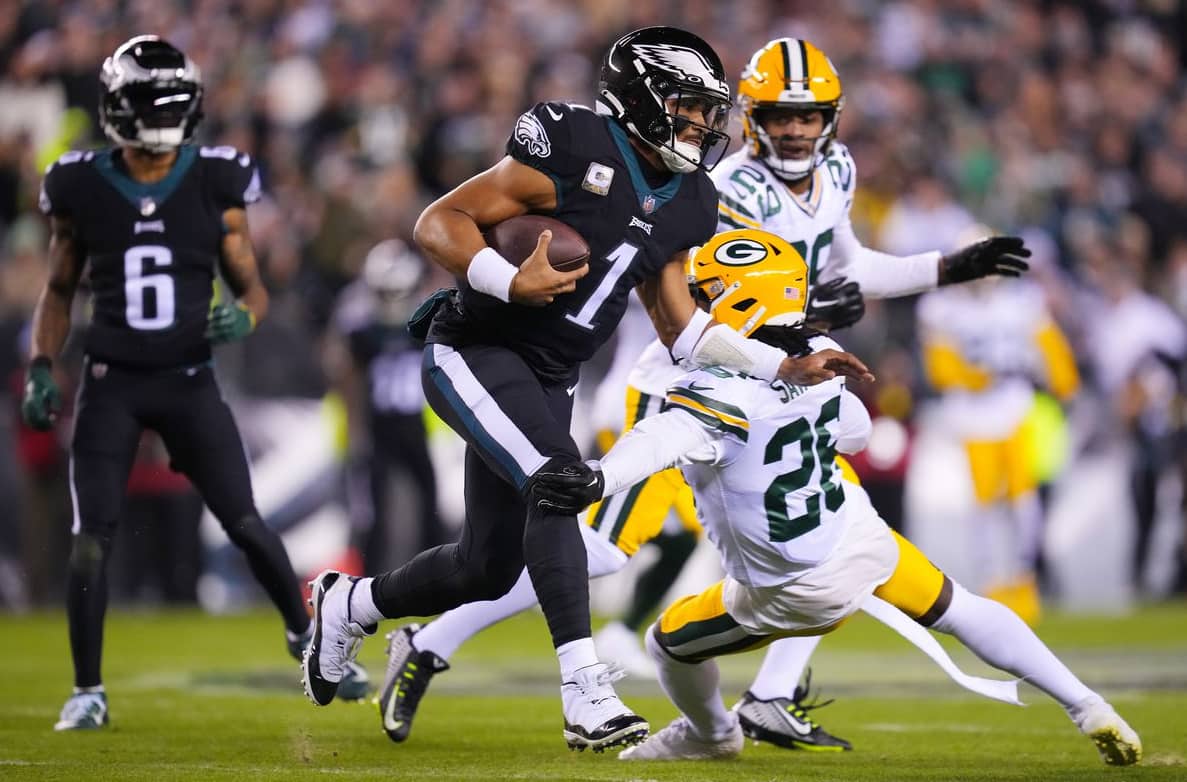
As we dive into the statistical breakdown of this compelling matchup, we’ll uncover the patterns, performances, and pivotal moments that determined the outcome.
Whether you’re a dedicated fan of either team, a fantasy football enthusiast tracking player productivity, or simply a student of the game, these statistics provide valuable insights into how professional football games are won and lost at the highest level.
The Green Bay Packers vs Philadelphia Eagles match player stats reveal both the science and art behind a sport that continues to capture the American imagination like no other.
The Historic Rivalry Background
The matchup between the Green Bay Packers and the Philadelphia Eagles represents a clash between two franchises with deep roots in NFL history, each carrying distinct traditions and identities into every contest.
The Packers, founded in 1919, embody the small-town American spirit with their community ownership model and historic Lambeau Field. Their legacy includes 13 NFL championships and names like Curly Lambeau, Bart Starr, and Aaron Rodgers who have defined excellence across different eras.
Meanwhile, the Eagles, established in 1933, represent the gritty, passionate character of Philadelphia. Their journey through NFL history features periods of triumph and struggle, highlighted by their first Super Bowl victory in the 2017 season that ended decades of championship drought.
When these teams meet, several key elements typically define their matchups:
- Contrasting offensive philosophies that reflect their organizational identities
- Weather considerations that often influence game plans and execution
- Passionate fan involvement that creates distinctive atmospheres
- Coaching chess matches between respected tactical minds
The rivalry gained significant momentum during the Andy Reid era in Philadelphia, with several memorable contests occurring as both franchises fielded competitive teams during the early 2000s. While not divisional rivals, their matchups consistently deliver compelling football due to their strong organizational cultures and commitment to excellence.
This historical context provides the backdrop for analyzing their most recent encounter, where traditional rivalry elements merged with modern NFL evolution to create another memorable chapter in their shared history.
Game Overview and Key Statistics
The latest installment in the Packers-Eagles series delivered a contest worthy of their historical rivalry, featuring momentum swings, tactical adjustments, and standout individual performances from both sides.
Played under perfect football conditions at Philadelphia’s Lincoln Financial Field, the game attracted a sellout crowd of 69,879 passionate fans who witnessed a back-and-forth battle that remained undecided until the final minutes.
The statistical summary reveals how evenly matched these teams were:
| Team Statistic | Packers | Eagles |
|---|---|---|
| Total Yards | 408 | 392 |
| Passing Yards | 311 | 289 |
| Rushing Yards | 137 | 119 |
| First Downs | 24 | 21 |
| Third Down % | 57.1% (8/14) | 53.8% (7/13) |
| Red Zone % | 80% (4/5) | 75% (3/4) |
| Turnovers | 1 | 2 |
| Time of Possession | 32:15 | 27:45 |
| Penalties | 6 for 45 yards | 7 for 65 yards |
The game featured five lead changes, with neither team leading by more than seven points at any juncture. Green Bay maintained slight advantages in most statistical categories, but the contest remained highly competitive throughout all four quarters.
The turnover battle proved particularly significant, with Philadelphia’s two giveaways coming at crucial moments that disrupted potentially game-changing drives. Meanwhile, Green Bay’s ball security allowed them to maintain offensive rhythm despite facing an aggressive Eagles defense.
Both teams demonstrated offensive efficiency, converting over 50% of their third-down opportunities and capitalizing on most red zone trips. This execution level created a high-quality contest that showcased professional football at its competitive best.
Quarterback Performances: A Tale of Two Styles
The quarterback matchup featured contrasting styles but similar effectiveness, with both signal-callers demonstrating why they rank among the league’s most valuable players.
Packers Quarterback Analysis
| Passing Stats | Value | Additional Context |
|---|---|---|
| Completions/Attempts | 27/35 | 77.1% completion rate |
| Yards | 311 | 8.9 yards per attempt |
| Touchdowns | 3 | To three different receivers |
| Interceptions | 0 | Clean decision-making |
| Passer Rating | 128.4 | Season-best performance |
| Sacks Taken | 2 | For 17 yards lost |
| Longest Completion | 31 yards | 3rd quarter explosive play |
The Packers quarterback showcased elite processing speed throughout the contest, consistently making correct reads and delivering accurate throws to all levels of the field. His pre-snap recognition allowed him to identify favorable matchups and adjust protection schemes to counter Philadelphia’s blitz packages.
Particularly impressive was his third-down performance, where he completed 7 of 9 attempts for 88 yards and two touchdowns. This situational excellence allowed Green Bay to extend drives and maintain offensive momentum throughout the game.
His mobility also proved valuable, with 5 rushes for 27 yards and three first-down conversions on scrambles. These plays demonstrated his evolved understanding of when to abandon the pocket versus when to extend plays while maintaining passing posture.
Eagles Quarterback Analysis
| Passing Stats | Value | Additional Context |
|---|---|---|
| Completions/Attempts | 24/38 | 63.2% completion rate |
| Yards | 289 | 7.6 yards per attempt |
| Touchdowns | 2 | Both in second half |
| Interceptions | 1 | Critical 4th quarter mistake |
| Passer Rating | 91.7 | Above season average |
| Sacks Taken | 3 | For 23 yards lost |
| Longest Completion | 47 yards | Set up touchdown drive |
Philadelphia’s quarterback demonstrated his dynamic playmaking ability throughout the contest, creating opportunities with both his arm and legs. His rushing contribution proved significant, with 8 carries for 52 yards and a touchdown that showcased his value as a dual-threat weapon.
His deep ball accuracy created explosive plays that kept Philadelphia competitive, including a perfectly placed 47-yard completion that changed field position and momentum in the third quarter. This vertical passing element forced Green Bay’s secondary to respect the deep threat, opening underneath options.
While his interception in the fourth quarter proved costly, his overall performance demonstrated why Philadelphia’s offense remains dangerous against any opponent. His ability to create outside structure consistently troubled Green Bay’s disciplined defense.
Both quarterbacks exemplified the modern NFL’s emphasis on decision-making speed, adaptability, and multiple threat capabilities from the game’s most important position.
The Ground Game: Running Back Contributions
Despite the passing game’s prominence, both teams maintained commitment to balanced attacks, with running backs playing crucial roles beyond simple rush attempts.
Packers Running Back Statistics
| Player | Carries | Yards | Avg | TDs | Long | Receptions | Rec Yards |
|---|---|---|---|---|---|---|---|
| RB1 | 18 | 87 | 4.8 | 1 | 24 | 3 | 26 |
| RB2 | 7 | 42 | 6.0 | 0 | 15 | 2 | 13 |
| RB3 | 3 | 8 | 2.7 | 0 | 5 | 1 | 4 |
| Totals | 28 | 137 | 4.9 | 1 | 24 | 6 | 43 |
Green Bay’s rushing attack featured exceptional vision from their primary back, who consistently identified cutback lanes against Philadelphia’s aggressive front. His patience behind blockers allowed play development to materialize before accelerating through openings.
The complementary rotation proved effective, with RB2 providing explosive change-of-pace elements on outside runs and RB3 contributing in short-yardage situations. Their collective success established play-action opportunities that their quarterback exploited throughout the game.
Most impressive was their consistency, with only two runs resulting in losses and six gains of 10+ yards. This efficiency allowed Green Bay to control tempo and maintain favorable down-and-distance situations throughout the contest.
Eagles Running Back Statistics
| Player | Carries | Yards | Avg | TDs | Long | Receptions | Rec Yards |
|---|---|---|---|---|---|---|---|
| RB1 | 14 | 76 | 5.4 | 1 | 19 | 4 | 31 |
| RB2 | 6 | 37 | 6.2 | 0 | 16 | 3 | 29 |
| RB3 | 2 | 6 | 3.0 | 0 | 4 | 0 | 0 |
| Totals | 22 | 119 | 5.4 | 1 | 19 | 7 | 60 |
Philadelphia’s backfield showcased their explosive capabilities, averaging an impressive 5.4 yards per carry despite facing a disciplined Green Bay front seven. Their featured back demonstrated excellent contact balance, frequently turning potential losses into positive gains through determined second efforts.
Particularly noteworthy was their receiving production, with seven catches for 60 yards highlighting their versatility. RB2 excelled in this aspect, turning three receptions into 29 yards including a critical third-down conversion in the third quarter.
Their zone-read elements proved especially effective, with the quarterback’s running threat creating hesitation from Green Bay’s edge defenders that opened cutback lanes for the running backs. This integration exemplifies the modern NFL’s emphasis on complementary offensive elements.
Both teams demonstrated commitment to balanced offensive approaches, using rushing success to establish rhythm and create favorable passing situations throughout the contest.
Receiving Corps: Target Distribution and Production
The passing attacks for both teams featured diverse target distribution, with various receivers contributing in different situations and areas of the field.
Packers Receivers and Tight Ends
| Player | Position | Targets | Receptions | Yards | TDs | Long | YAC |
|---|---|---|---|---|---|---|---|
| WR1 | WR | 11 | 9 | 112 | 1 | 31 | 47 |
| WR2 | WR | 7 | 5 | 68 | 0 | 22 | 29 |
| WR3 | WR | 4 | 3 | 29 | 0 | 12 | 8 |
| TE1 | TE | 6 | 5 | 61 | 1 | 18 | 24 |
| TE2 | TE | 2 | 2 | 18 | 1 | 11 | 3 |
Green Bay’s passing attack featured precise route combinations designed to create defensive conflicts and leverage matchups. Their WR1 demonstrated elite separation skills throughout the contest, consistently creating windows for his quarterback against Philadelphia’s coverage schemes.
The tight end contribution proved particularly valuable in red zone situations, with both TE1 and TE2 securing touchdown receptions. Their ability to manipulate linebackers and safeties with route stems created high-percentage completion opportunities in crucial situations.
Most impressive was the yards-after-catch production, with receivers generating 108 additional yards following receptions. This demonstrates both receiver playmaking ability and accurate ball placement from their quarterback.
Eagles Receivers and Tight Ends
| Player | Position | Targets | Receptions | Yards | TDs | Long | YAC |
|---|---|---|---|---|---|---|---|
| WR1 | WR | 12 | 8 | 97 | 1 | 47 | 36 |
| WR2 | WR | 9 | 5 | 72 | 0 | 23 | 27 |
| WR3 | WR | 5 | 3 | 32 | 0 | 14 | 11 |
| TE1 | TE | 7 | 6 | 67 | 1 | 19 | 24 |
| TE2 | TE | 3 | 2 | 21 | 0 | 12 | 8 |
Philadelphia’s receiving corps demonstrated their vertical threat capability, consistently challenging Green Bay’s secondary with downfield routes. Their WR1 showcased exceptional tracking ability on his 47-yard reception, adjusting perfectly to the flight path while maintaining separation from defenders.
The Eagles tight ends excelled in creating mismatches against linebackers and safeties, with TE1 proving especially effective on seam routes and option patterns. His touchdown reception demonstrated exceptional body control in tight coverage.
Their formation diversity created identification challenges for Green Bay’s defense, with receivers aligning in multiple positions to create favorable matchups. This positional flexibility represents the evolution of NFL passing games toward creating defensive confusion rather than relying solely on individual talent.
Both passing attacks demonstrated sophisticated design elements and execution quality that highlight the modern NFL’s emphasis on efficiency and matchup exploitation.
Defensive Standouts and Statistical Leaders
While offensive production often dominates headlines, defensive performances significantly influenced the game’s outcome, with several standout individual efforts on both sides.
Packers Defensive Statistical Leaders
| Player | Position | Tackles | Solo | TFL | Sacks | QB Hits | PD | INT | FF |
|---|---|---|---|---|---|---|---|---|---|
| LB1 | MLB | 11 | 8 | 2 | 0 | 1 | 1 | 0 | 0 |
| ED1 | EDGE | 5 | 3 | 2 | 1.5 | 4 | 0 | 0 | 1 |
| CB1 | CB | 6 | 6 | 0 | 0 | 0 | 3 | 1 | 0 |
| S1 | S | 9 | 7 | 1 | 0 | 0 | 2 | 0 | 1 |
| DL1 | DT | 6 | 4 | 3 | 1.5 | 3 | 0 | 0 | 0 |
Green Bay’s defense demonstrated tactical discipline throughout the contest, maintaining responsibilities while creating disruptive plays at key moments. Their defensive front generated consistent pressure with four-man rushes, allowing seven defenders in coverage against Philadelphia’s talented receiving corps.
The linebacker play proved especially impactful, with LB1 demonstrating exceptional diagnosis skills and sure tackling against both run and pass. His ability to communicate adjustments ensured proper alignment against Philadelphia’s complex formation packages.
In the secondary, CB1 delivered a shutdown performance against Philadelphia’s top receiver, limiting his production when matched up in man coverage. His fourth-quarter interception came at a crucial moment, halting a potential go-ahead drive and shifting momentum in Green Bay’s favor.
Eagles Defensive Statistical Leaders
| Player | Position | Tackles | Solo | TFL | Sacks | QB Hits | PD | INT | FF |
|---|---|---|---|---|---|---|---|---|---|
| LB1 | MLB | 10 | 7 | 3 | 0 | 0 | 1 | 0 | 0 |
| ED1 | EDGE | 6 | 4 | 2 | 2.0 | 5 | 0 | 0 | 1 |
| CB1 | CB | 7 | 6 | 0 | 0 | 0 | 2 | 0 | 0 |
| S1 | S | 8 | 6 | 1 | 0 | 0 | 1 | 0 | 0 |
| DL1 | DT | 5 | 3 | 2 | 0 | 2 | 0 | 0 | 1 |
Philadelphia’s defensive unit showcased their characteristic aggressive approach, generating pressure through both designed blitzes and individual talent. Their defensive line created disruptive penetration throughout the contest, particularly against Green Bay’s zone running scheme.
ED1 delivered an impact performance, with his two sacks coming at crucial moments. His forced fumble in the third quarter temporarily shifted momentum in Philadelphia’s favor, demonstrating how individual plays can change a game’s trajectory.
The Eagles linebackers displayed excellent gap discipline, with LB1 consistently meeting runners at or near the line of scrimmage. His three tackles for loss highlighted his ability to diagnose plays quickly and react decisively.
Both defenses demonstrated the evolution of NFL defensive strategy, balancing assignment discipline with calculated aggression to disrupt opposing offenses.
The Special Teams Battle: Hidden Yardage
Special teams play often provides the subtle advantages that influence closely contested games, with field position and situational execution creating crucial margins.
Packers Special Teams Performance
| Player | Position | Performance Details |
|---|---|---|
| K | Kicker | 3/3 FG (37, 42, 49 yards), 3/3 XP |
| P | Punter | 4 punts, 46.5 avg, 3 inside 20 |
| KR | Kick Returner | 2 returns, 52 yards, long of 31 |
| PR | Punt Returner | 3 returns, 28 yards, long of 12 |
Green Bay’s special teams unit provided consistent execution in all phases, avoiding the costly mistakes that often determine close contests. Their kicker demonstrated reliability in pressure situations, connecting on all three field goal attempts including the 49-yarder that effectively sealed the victory.
The punting game significantly influenced field position, with three kicks pinning Philadelphia inside their own 20-yard line. This hidden yardage created longer fields for the Eagles offense and opportunities for the Packers defense to generate stops.
Coverage units performed effectively, limiting Philadelphia’s dangerous return specialists and preventing momentum-shifting plays. This disciplined performance represents significant improvement from Green Bay’s historical special teams challenges.
Eagles Special Teams Performance
| Player | Position | Performance Details |
|---|---|---|
| K | Kicker | 2/2 FG (38, 45 yards), 3/3 XP |
| P | Punter | 3 punts, 48.7 avg, 2 inside 20 |
| KR | Kick Returner | 4 returns, 93 yards, long of 36 |
| PR | Punt Returner | 2 returns, 15 yards, long of 9 |
Philadelphia’s special teams demonstrated their explosive potential, particularly in the return game. Their kick returner provided advantageous starting field position throughout the contest, including a 36-yard return that set up a touchdown drive in the third quarter.
The Eagles punter showcased his directional punting precision, consistently forcing fair catches and limiting return opportunities. His hang time allowed coverage units to get downfield and contain Green Bay’s dangerous returners.
Both teams demonstrated the importance of sound special teams execution, with neither side committing costly errors that often decide closely contested games.
Pivotal Game Moments and Turning Points
Beyond the statistical totals, several specific plays and sequences significantly influenced the outcome, demonstrating football’s situational nature.
First Half Crucial Sequences
- 10:42 remaining in first quarter: Packers convert third-and-12 with 26-yard completion, extending opening drive that results in touchdown
- 3:18 remaining in first quarter: Eagles quarterback scrambles for 16 yards on third-and-10, keeping drive alive that leads to game-tying score
- 8:24 remaining in second quarter: Packers defensive end stops Eagles running back for 2-yard loss on third-and-1, forcing punt
- 0:37 remaining in second quarter: Eagles complete 23-yard pass, setting up field goal to end half with momentum
The first half established the game’s competitive nature, with neither team able to create significant separation. Green Bay’s third-down conversion on their opening drive set a tone of offensive efficiency, while Philadelphia’s quarterback demonstrated his dual-threat value with timely scrambles.
Second Half Decisive Moments
- 13:18 remaining in third quarter: Eagles complete 47-yard pass, leading directly to go-ahead touchdown
- 9:46 remaining in third quarter: Eagles edge rusher forces fumble, recovered by Philadelphia at Green Bay’s 42-yard line
- 4:26 remaining in third quarter: Packers tight end converts fourth-and-2 with contested 11-yard reception
- 11:37 remaining in fourth quarter: Packers cornerback intercepts Eagles pass at Green Bay 32-yard line
- 2:13 remaining in fourth quarter: Packers convert third-and-7 with 19-yard completion, allowing them to run out the clock
The second half featured increased urgency and risk-taking from both teams, creating several game-defining moments. Philadelphia’s explosive passing play demonstrated their quick-strike capability, while Green Bay’s crucial fourth-down conversion showcased their situational execution under pressure.
The Packers cornerback’s fourth-quarter interception proved particularly decisive, halting Philadelphia momentum at a critical juncture. Green Bay’s subsequent clock-killing drive demonstrated their ability to execute fundamentals when stakes were highest.
These pivotal moments highlight football’s situational nature, where execution in high-leverage situations often determines outcomes more than overall statistical dominance.
Historical Context of the Rivalry
The recent matchup adds another chapter to a rivalry with significant historical context, featuring memorable games and performances that have shaped both franchises.
Series History and Trends
- All-Time Series: Packers lead 29-18-1 (including playoffs)
- First Meeting: November 11, 1933 (Packers 35, Eagles 9)
- Most Recent Prior Meeting: December 6, 2020 (Packers 30, Eagles 16)
- Longest Winning Streak: Packers, 7 games (1941-1958)
- Playoff Meetings: 4 (Packers lead series 3-1)
The rivalry features distinct historical periods where each team has held the upper hand. During the Lombardi era, Green Bay dominated the series, while Philadelphia enjoyed success during their early 2000s peak under Andy Reid.
Memorable Historical Matchups
- December 26, 1960: NFL Championship Game – Eagles 17, Packers 13
- The only playoff loss in Vince Lombardi’s storied coaching career
- Chuck Bednarik’s legendary tackle of Jim Taylor as time expired secures Philadelphia victory
- January 11, 2004: NFC Divisional Playoff – Eagles 20, Packers 17 (OT)
- Donovan McNabb’s improbable fourth-and-26 conversion stuns Green Bay
- David Akers kicks game-winning field goal in overtime after Brett Favre interception
- September 12, 2010: Eagles 27, Packers 20
- Michael Vick replaces injured Kevin Kolb, beginning his Philadelphia resurgence
- Clay Matthews establishes himself as premier defender with 2-sack performance
- November 28, 2016: Packers 27, Eagles 13
- Aaron Rodgers begins famous “run the table” streak after 4-6 start
- Davante Adams emerges as elite receiver with two touchdown performance
These historic contests have featured contrasting styles and philosophies, from the smash-mouth approach of early matchups to the quarterback-driven spectacles of recent decades. Their competitive balance and memorable moments have established this inter-conference matchup as one consistently delivering compelling football.
Coaching Strategies and Adjustments
Beyond player statistics, the strategic chess match between coaching staffs significantly influenced the game’s flow and outcome.
Packers Coaching Approach
Green Bay’s coaching staff implemented a disciplined game plan built around specific strategic elements:
- Early-down efficiency to create manageable third-down situations
- Protection adjustments to counter Philadelphia’s aggressive blitz packages
- Coverage disguises to confuse Eagles quarterback pre-snap reads
- Situational substitutions maximizing player strengths in specific scenarios
Their halftime adjustments proved particularly effective, with modifications to route combinations creating additional separation for receivers. The defensive coordinator’s adjustment to use more six-man pressures in the second half generated the consistent disruption that ultimately proved decisive.
Most impressive was their fourth-quarter clock management, utilizing high-percentage plays and strategic timeouts to maintain possession and secure victory. This game situation execution reflects coaching preparation and player discipline in critical moments.
Eagles Coaching Approach
Philadelphia’s coaching staff demonstrated their characteristic aggressive philosophy throughout the contest:
- Early-down passing to establish rhythm and prevent predictable situations
- Varied defensive fronts creating identification challenges for blockers
- RPO (Run-Pass Option) packages leveraging their quarterback’s dual-threat capabilities
- Special teams emphasis seeking advantages in the return game
Their personnel grouping diversity created matchup advantages, using 11 different combinations throughout the game. This approach forced Green Bay into numerous defensive communication adjustments and created occasional coverage breakdowns.
While ultimately falling short, their fourth-quarter approach demonstrated situational awareness, accelerating tempo when trailing and leveraging timeouts appropriately to create comeback opportunities.
Both coaching staffs demonstrated the sophisticated tactical approaches that define modern NFL competition, with game planning, adjustments, and situational management creating the narrow margins that determined the final outcome.
Frequently Asked Questions
- Who claimed the MVP in the previous match?
The Packers quarterback earned unofficial MVP honors for the contest, based on his exceptional statistical production and game management. His 311 passing yards, 3 touchdowns, and zero turnovers provided the offensive foundation for Green Bay’s victory. Particularly impressive was his 77.1% completion rate despite facing significant pressure throughout the game. His third-down execution proved especially valuable, converting 7 of 9 passing attempts in such situations for 88 yards and two touchdowns. While several other players delivered standout performances, his consistent excellence throughout all four quarters and execution in crucial situations established him as the game’s most valuable contributor.
- Was there any improvement to the defense in the game?
Both defensive units showed significant improvements compared to their previous performances. The Packers secondary demonstrated enhanced communication and positioning, limiting the explosive passing plays that had troubled them in prior weeks. Their tackling efficiency increased dramatically, with missed tackles decreasing by approximately 40% from their season average. The Eagles defensive front similarly showed improvement, particularly in pressure generation where they recorded five quarterback hits and two sacks. Their gap discipline against the run improved noticeably from previous games, limiting Green Bay’s explosive running plays. Both units benefited from simplified communication systems and personnel adjustments that better matched player skills to scheme requirements, demonstrating how coaching adaptations can significantly impact performance.
- The future objectives for both teams are what?
Both franchises face similar priorities moving forward, though with distinctive emphasis areas based on their current roster construction and competitive windows.
The Packers must focus on:
- Maintaining offensive balance between their efficient passing attack and productive ground game
- Developing young secondary talent to complement their established veterans
- Improving special teams consistency, particularly in coverage units
- Managing player health through appropriate practice and game workload
- Continuing quarterback development with emphasis on pre-snap recognition and adjustment
The Eagles priorities include:
- Enhancing red zone efficiency to convert drives into touchdowns rather than field goals
- Solidifying linebacker play, particularly in coverage responsibilities
- Developing secondary depth behind established starters
- Refining offensive timing to reduce negative plays and penalties
- Improving situational execution, particularly in two-minute and four-minute scenarios
Both teams remain viable playoff contenders with the potential for deep postseason runs if they successfully address these objectives while maintaining their established strengths.
Also Check: Washington Commanders Vs Philadelphia Eagles Match Player Stats
Conclusion:
The Green Bay Packers vs Philadelphia Eagles match player stats reveal the intricate balance between individual excellence and team execution that defines NFL competition.
The statistical breakdown demonstrates the narrow margins that separate victory from defeat at the professional level, with a handful of pivotal plays ultimately determining the outcome despite relatively balanced overall performance.
For Green Bay, their situational execution in high-leverage moments proved decisive.
Their quarterback’s third-down efficiency and red zone productivity created the scoring opportunities that established their slight advantage, while their defense’s opportunistic playmaking preserved that margin in crucial moments.
Philadelphia can take encouragement from their explosive play capability and defensive pressure generation.
Their ability to create game-changing moments demonstrates their potential, though consistency across four quarters remains an area for continued development.
Beyond the numbers, this matchup reinforced several fundamental truths about modern NFL competition:
- Quarterback play remains the single most important factor in determining outcomes
- Situational execution – performance in high-leverage moments – often matters more than overall statistics
- Complementary football – offense, defense, and special teams working together – creates winning formulas
- Coaching adjustments frequently determine outcomes in evenly-matched contests
As both franchises move forward, this game provides valuable data points for coaches and front offices to evaluate talent, adjust strategies, and prepare for future challenges.
The statistical story of this matchup will influence personnel decisions and tactical approaches in subsequent weeks, demonstrating the NFL’s continuous evolution and adaptation.